
If you turn on your faucet and nothing comes out, the first thing most homeowners do is panic. The second thing they do is reach for the phone. Before you do either, take a breath. A well pump that has stopped working is not always a sign of catastrophic failure, and in some cases, the fix is something you can handle yourself in under ten minutes.
This guide walks you through the most common reasons a well pump stops working, what to check on your own, and how to know when it actually is time to bring in a professional.
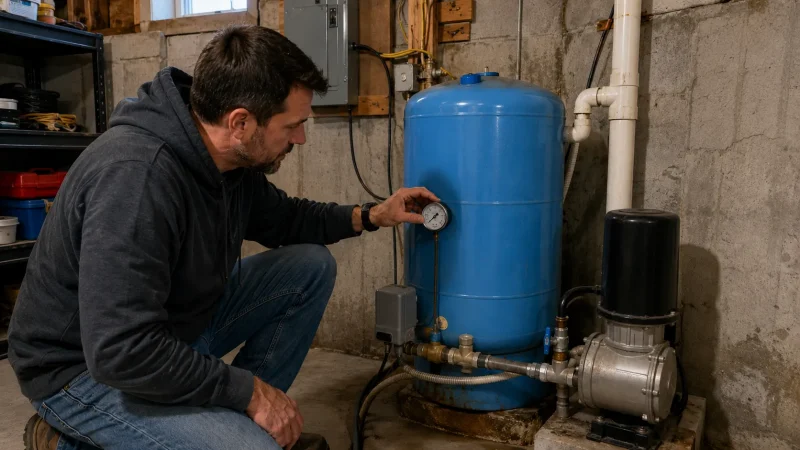
Start With the Basics: Electrical Issues Are the Most Common Culprit
Before assuming your well pump is dead, check the power supply. A surprisingly large number of service calls turn out to be electrical problems that have nothing to do with the pump itself.
Check Your Circuit Breaker First
Well pumps run on dedicated circuits, usually a 240-volt double-pole breaker. Go to your electrical panel and look for the breaker labeled “well pump” or “water pump.” If it has tripped, it will sit in a middle position between on and off, or it may be fully switched to off.
Reset it by flipping it all the way off and then back on. If it trips again immediately or within a few minutes of the pump running, do not keep resetting it. A breaker that keeps tripping is telling you there is an underlying problem, whether that is a short in the wiring, a failing motor, or a pump that is overloaded. Continuing to reset it can cause more damage or create a fire hazard.
Check for Blown Fuses
Older homes and some well systems use fuse boxes rather than breakers. If you have fuses, inspect the one tied to the pump circuit. A blown fuse will have a visibly broken filament or a blackened appearance. Replace it with the correct amperage fuse and see if the pump restores. Again, if it blows again right away, the problem is not the fuse.
Look at the Pressure Switch
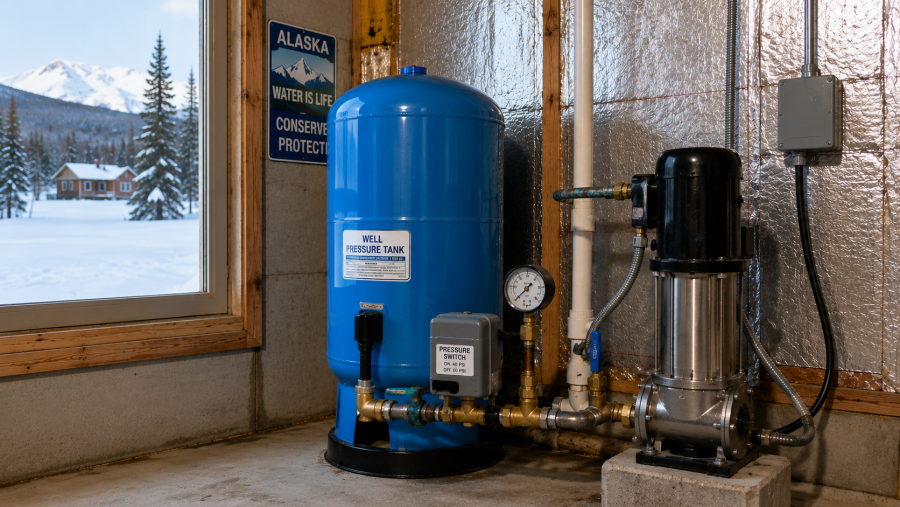
The pressure switch is a small box, usually mounted near the pressure tank, with two wires running into it. It tells the pump when to turn on and off based on water pressure readings. These switches can fail, corrode, or get their contact points burned out, especially in humid environments.
You can visually inspect it for signs of corrosion, scorch marks, or rust. Some homeowners replace these themselves since they are inexpensive and straightforward to swap out. But if you are not comfortable working around electrical components, leave it for a professional.
Low or No Water Pressure: What It Means for Your Well Pump
If you are getting some water but the pressure is weak or inconsistent, the problem may not be the pump itself but the pressure tank.
How the Pressure Tank Works
The pressure tank stores pressurized water and maintains consistent flow throughout your home. Inside it is a bladder or diaphragm that separates air from water. Over time, that bladder can rupture, causing the tank to become waterlogged. When this happens, the pump short cycles, meaning it turns on and off rapidly instead of running in normal intervals.
Short cycling puts serious wear on the pump motor. If left unaddressed, it will burn out the pump well before its normal lifespan.
How to Test the Pressure Tank
Turn off the power to the pump. Go to the Schrader valve on the pressure tank (it looks like a tire valve) and press the pin in the center. If water comes out instead of air, the bladder is compromised and the tank needs to be replaced. If air comes out but at a pressure well below the recommended level (usually 2 PSI below the cut-in pressure), you can recharge it with a standard air compressor.
A waterlogged pressure tank is one of the most common reasons homeowners think their well pump has failed when it actually has not.
The Pump Is Running But Not Delivering Water
This is a frustrating situation where the system sounds like it is working but nothing comes out of the tap. There are a few specific causes to investigate here.
Dry Well or Dropped Water Table
In areas that experience drought or heavy seasonal water use, the water table can drop below the pump intake level. This is more common with shallow wells but can happen with deeper wells during extended dry periods.
Alaska is not immune to this, particularly in areas with seasonal variation in groundwater levels. If your neighbors on the same water source are reporting similar issues, a dropped water table is a reasonable explanation.
There is not much a homeowner can do here except wait for the water table to recover or have a contractor assess whether the pump needs to be lowered or the well deepened.
Pump Intake Screen Clogged
Submersible pumps sit at the bottom of the well and draw water through a screen or intake port. Sediment, sand, and mineral deposits can gradually clog that intake. When the intake is blocked, the pump runs but cannot move water effectively.
This is a job for a professional since it requires pulling the pump from the well, which involves specialized equipment and cannot be done safely without it.
Worn or Damaged Impellers
Inside your well pump are impellers, which are rotating components that move water through the system. Over time, they wear down or get damaged by debris passing through the system. When the impellers are worn, the pump motor runs but water delivery drops significantly.
Impeller replacement typically means pulling the pump and either rebuilding it or replacing it entirely, depending on the extent of the damage.
Your Well Pump Is Running Constantly
A pump that never shuts off is just as problematic as one that does not turn on. Constant operation accelerates wear and significantly shortens the pump’s lifespan.
Pressure Switch Set Too High
If the cut-out pressure on your pressure switch is set higher than what the pump can achieve, it will run indefinitely trying to hit a target it cannot reach. A professional can recalibrate the switch settings to match your pump’s actual capacity.
Leak in the Plumbing System
A significant leak somewhere between the well and your home can cause the system to continuously lose pressure. The pump detects the pressure drop and keeps running to compensate. Walk the visible plumbing runs in your home and look for wet spots, water stains, or the sound of running water when all fixtures are off.
Well Yield Problem
If the well is not producing water fast enough to keep up with demand, the pump will run constantly trying to fill the gap. This is a well capacity issue, not a pump issue, but it will damage the pump over time if not addressed.
Unusual Noises Coming From Your Well System
Strange sounds are often the first sign that something is wrong before any loss of water pressure or flow occurs.
Clicking or Rapid Cycling
A pressure switch that clicks on and off repeatedly in short bursts almost always points back to a waterlogged pressure tank. As mentioned earlier, this short cycling will burn out your pump motor if ignored.
Grinding or Screeching
Grinding noises from a submersible pump usually indicate worn bearings in the motor. Screeching can also point to a motor that is overheating or struggling under load. Neither of these resolves on its own. A pump that grinds and continues to run is working toward complete failure.
Air Spurting From Faucets
If your faucets spit air along with water, it can indicate a drop in the water table, a crack in the well casing that is allowing air infiltration, or a failing foot valve at the bottom of the well. Any of these requires professional diagnosis.
How Alaska’s Climate Affects Well Pump Performance
Well pumps in Anchorage and across Alaska face conditions that homeowners in the lower 48 simply do not deal with. Extreme cold, permafrost, freeze-thaw cycles, and remote access all add layers of complexity to pump performance and maintenance.
Freezing and Frost Depth
Even submersible pumps, which sit well below the frost line, can be affected when the pipes connecting them to the surface are not properly insulated or buried deep enough. Frost heave can shift or crack wellhead casings, and the electrical lines running to the pump can be damaged by ground movement over time.
If your well pump stops working in late fall or winter, freezing somewhere in the system is always worth considering before assuming the pump itself has failed.
Power Fluctuations in Remote Locations
Many Alaska properties are in areas where the electrical grid is less stable or where generators are the primary power source. Voltage fluctuations and power surges are harder on pump motors than steady utility power. Surge protection for your well system is a relatively inexpensive safeguard that can significantly extend pump life.
Sediment and Water Quality
Groundwater in some parts of Alaska carries higher sediment loads, iron bacteria, or mineral content. These factors accelerate wear on pump components and clog intake screens faster than in areas with cleaner source water. Regular maintenance and water quality testing are not optional in these conditions.
When to Stop Troubleshooting and Call a Professional
Most of the electrical checks and pressure tank tests described above are within reach for a reasonably handy homeowner. But there are clear situations where calling a professional is the right move.
Pull the pump if any of the following apply. You have no water at all and the breaker is fine. The breaker trips every time the pump tries to run. You hear grinding or the motor runs but produces nothing. You suspect a casing crack, contamination, or a dry well. The pump is over ten years old and showing multiple symptoms at once.
Pulling a well pump requires a pump jack, cable, and knowledge of how to handle the pump without damaging the drop pipe or electrical line. Attempting it without the right equipment can turn a pump repair into a much more expensive job.
What a Well Pump Service Call Actually Involves
When you bring in a qualified well pump contractor, they will typically start with a pressure test and flow rate check. They will inspect the pressure tank, the pressure switch, the wiring at the wellhead, and the control box if your system has one.
If everything at the surface checks out, the next step is usually pulling the pump from the well to inspect the motor, impellers, check valve, and intake screen. From there, the contractor can tell you whether the pump needs to be rebuilt, replaced, or whether the issue is actually with the well itself rather than the pump.
A good contractor will give you a clear diagnosis with specific recommendations rather than pushing for a full pump replacement when a repair will do the job.
Keeping Your Well Pump Working Longer
Routine maintenance is the most effective thing you can do to avoid emergency pump failures. That means checking your pressure tank air charge annually, having the well and pump system inspected every few years, testing your water quality regularly, and addressing small problems like pressure fluctuations before they compound into larger ones.
In Alaska specifically, winterizing exposed plumbing around the wellhead, keeping an eye on electrical connections at the surface, and monitoring water quality seasonally will all extend the life of your pump and the reliability of your water supply.
A well pump that is properly installed, sized correctly for the well and household demand, and maintained on a routine schedule should give you 10 to 15 years of reliable service, sometimes longer. Most premature failures come down to deferred maintenance or a pump that was never the right fit for the system to begin with.
If your well pump has stopped working and you have worked through the basics without a solution, or if you already know you need professional service, explore Hefty Drilling‘s well pump service and well pump installation Service pages to see how we approach diagnosis, repair, and replacement across Anchorage and the surrounding Alaska area. You can also call or text us directly at (907) 830-9985 to talk through what you are seeing and get a free estimate from a team that has been working Alaska wells since 1979.
